
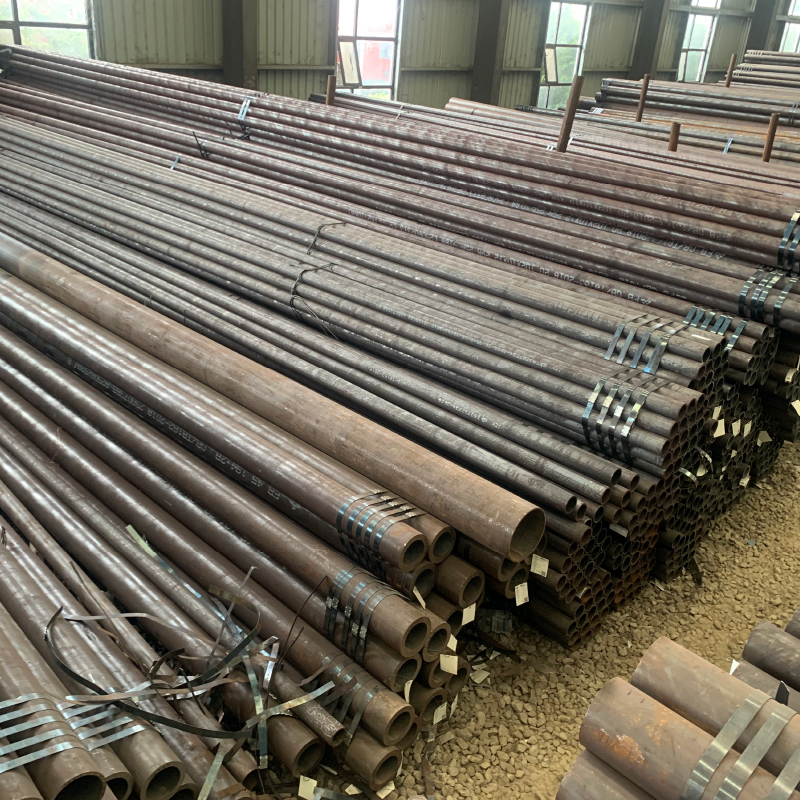
Core Advantages of Alloy Products: The Sublimation of Performance
Revolutionary Enhancement of Strength and Toughness
Pure metals often suffer from insufficient strength or poor toughness. Adding specific elements, such as carbon, manganese, nickel, or molybdenum, can significantly refine grain structure and form strengthening phases, resulting in mechanical properties vastly superior to the base metal. For example, adding carbon to plain steel creates carbon steel, greatly enhancing its strength and hardness. Further addition of chromium, nickel, etc., leads to high-strength, high-toughness alloy structural steel, widely used in heavy machinery and critical structural components.Exceptional Resistance to Environmental Degradation
Alloying is one of the most effective ways to enhance material durability. The most iconic example is stainless steel, which achieves excellent rust and corrosion resistance by adding at least 10.5% chromium to form a dense chromium oxide passive layer on the surface. For more severe environments (e.g., marine, chemical processing), duplex stainless steels or nickel-based alloys with added elements like molybdenum and nitrogen can resist complex failure modes such as pitting and stress corrosion cracking.Stable Performance Under Extreme Temperatures
Faced with high or low-temperature challenges, ordinary materials may soften, embrittle, or oxidize severely. Superalloys (e.g., nickel-based, cobalt-based) maintain high strength, creep resistance, and oxidation resistance at elevated temperatures through complex alloy design, making them core materials for aircraft engines and gas turbines. Alloys that retain good toughness at low temperatures are crucial for LNG storage tanks and polar equipment.Acquisition of Special Physical and Functional Properties
Alloying can impart unique properties to materials to meet specific functional demands:Lightweighting: Aluminum-magnesium and titanium alloys offer high strength while being significantly less dense than steel, key for weight reduction in aerospace and new energy vehicles.
Special Electromagnetic Properties: Silicon steel sheets (iron-silicon alloy) possess excellent soft magnetic properties and are core materials for motor and transformer cores.
Wear Resistance: High-carbon high-chromium alloy steels (e.g., D2) or tungsten-cobalt cemented carbides offer extreme hardness and wear resistance for molds, cutting tools, and mining machinery.
Major Alloy Product Categories and Application Fields
Stainless Steel Series: Including austenitic (e.g., 304, 316), ferritic, martensitic, and duplex stainless steels, applied in kitchenware, building facades, chemical equipment, medical devices, and offshore platforms.
Alloy Structural Steels & Tool Steels: Used for manufacturing gears, shafts, connecting rods (e.g., 4140, 4340) under high load/impact, and molds/tools (e.g., H13, M2) for cutting, stamping, and forming.
Superalloys & Heat-Resistant Steels: Serve extreme hot-end components in aircraft engines, rocket engines, industrial gas turbines, and nuclear power equipment.
Lightweight Alloys: Aluminum alloys (e.g., 6005, 7075), magnesium alloys, titanium alloys (e.g., Ti-6Al-4V), widely used in aircraft fuselages, high-speed train carriages, high-end consumer electronics, and medical implants.
Other Functional Alloys: Including precision alloys (e.g., Invar alloy), magnetic materials, electrical heating alloys (e.g., nickel-chromium alloy), and cemented carbides.
Choosing Us: Customizing Your Alloy Solution
As a professional supplier of alloy materials, we not only provide standard grade products across the major categories mentioned above but also possess a deep understanding of the essence of alloy design. Based on your specific application environment (e.g., medium, temperature, stress state), performance requirements (strength, corrosion/wear resistance, lightweighting), and processing techniques (welding, forging, machining), we can offer expert material selection advice, technical specification customization, and post-processing support.
From a corrosion-resistant precision instrument component to a turbine blade enduring thousand-degree heat, the science of alloying grants materials limitless possibilities. Let us use our professional expertise and extensive product lines to assist you in finding or co-developing the alloy material that is "just right," injecting core competitiveness and lasting reliability into your products.